
Thanks to everyone who kept up with our fourth series, "Hollywood Does Politics" - we hope you've enjoyed it.
So what did we learn?
For starters, accuracy isn't the first concern Hollywood has when making poltical movies - entertainment is. We also found out that so far political movies tend to lean left more often than right.
The last thing we discovered was exactly what made a good political campaign movie: the right combination of accuracy, entertainment value, and deeper lessons. Movies like "Primary Colors" - which came out as #1 on our Top 5 Political Campaign Movies list yesterday - have just the right amount of each factor.
Thanks again for following the series, and keep reading for more great series in the future!
Showing posts with label Hollywood Does Politics. Show all posts
Showing posts with label Hollywood Does Politics. Show all posts
Saturday, December 19, 2009


Friday, December 18, 2009
The Top 5 Political Campaign Movies
Part 5 of our 5-part series: “Hollywood Does Politics”
It’s finally here: our Top 5 fictional movies about political campaigns! Before we tell you all about them, let’s go over how we came up with the list.
First, the movies cannot be a documentary. We already listed our top 5 political campaign documentaries last week.
Second, it has to be about campaigns. While “Mr. Smith Goes to Washington” is one of the best political films of all time, it only barely involves a campaign (and a machine campaign that’s not quite so relevant today – at least outside of Chicago).
Third, we had to decide what factors were important for the list. The three factors that went into our decisions were:
The following movies had all of the three components, although each stressed some more than others. Then we’ll show you what campaign movies some of our readers most enjoyed.
Here’s our list…

1) “Primary Colors” (1998)
Screenplay by: Elaine May
Produced by: Mike Nichols, Jonathan Krane, Neil Machlis
Directed by: Mike Nichols
Based on the novel by Anonymous (later revealed to be journalist Joe Klein), “Primary Colors” follows the story of a southern governor running for president in the Democratic primary. It is well understood that the novel and film are meant to portray the 1992 Clinton campaign during the presidential primaries.
The film is funny, dramatic, insightful, and accurate about politics and campaigns.
Watch the trailer:
The candidate is Governor Jack Stanton (John Travolta) who very much resembles Bill Clinton. The movie opens with his staff trying to recruit Henry Burton (Adrian Lester) for a high-level position on the campaign. Burton is often thought to represent George Stephanopoulos.
As he gets wrapped into the campaign, Burton meets other colorful characters such as Susan Stanton (Emma Thompson) – Jack’s wife and a good portrayal of the real-life Hilary – Democratic strategist Richard Jemmons (Billy Bob Thorton) – who is a great representation of James Carville – and Libby Holden (Kathy Bates), Jack’s former chief-of-staff with deep-rooted emotional problems.
Throughout the film, the audience is exposed to a large sample of campaign truisms that they might not expect. Volunteers have trouble learning to work with computer voter files, upper-level staff researches both the opposition and their own candidate, and they actively work for support from key Democratic voting blocs. For example, Burton has one Jewish volunteer call up every rabbi in the phone book and start the conversation in Hebrew.
The campaign strategy is also fairly accurate. When Stanton encounters rumors about extramarital affairs, friends of the Stantons suggest that the campaign ignore the rumors as unsubstantiated and malicious attacks. The campaign, in their mind, is about the issues. Jemmons wisely points out that they “can’t ignore” the attacks, knowing that it would only seem to confirm their truth.
One of the most interesting aspects is how the staffers view campaigning – they’re professionals, not activists, and they can’t get emotionally attached to the politics. In one scene, Jemmons points out how a real pro shouldn’t get caught up in “true believerism”:
The movie is also delightfully humorous - at least at the start. As the film goes on, Burton is more and more asked to cross lines into morally grey territory. As Stanton tells him at the end, when he’s concerned about all the ethically challenging parts of campaigning:
“Primary Colors” combines it all - political accuracy, entertainment, and watching it forces you to think about what code you must carry as (what Aristotle called) a political animal.
If you haven’t seen it, rent it right away.
2) “The Candidate” (1972)
Screenplay by: Jeremy Larner
Produced by: Walter Coblenz
Directed by: Michael Ritchie
Written by a speechwriter for Sen. Eugene McCarthy during his presidential campaign, “The Candidate” focuses on a California Senate race between Democrat Bill McKay (Robert Redford) and Republican incumbent Crocker Jarmon (Don Porter).
Watch the original trailer:
Political consultant Marvin Lucas (Peter Boyle) goes to California to recruit a candidate he figures doesn’t have a chance, but will pay the bills through the election cycle. He convinces McKay to run, with the understanding that he’ll lose, and thus can say whatever he wants. As the race goes on, it becomes clear that he has a shot of winning, and the campaign becomes more and more about toning down McKay’s strong liberalism.
Message is the primary topic of this film. Early on, we see how McKay’s experienced staff tries to frame the message in such a way that it will be appealing to the voters while not undermining the candidate’s beliefs. For example, McKay is pro-choice, but the advisors tell him to say more studies need to be done on the topic (remember in 1972 abortion was still illegal in most parts of the country, and being pro-life was the norm).
Sometimes, they simply had to come up with a line that was catchy and funny because the candidate was so liberal it could damage him. For example, when asked about where the communists should be stopped (in Vietnam or on the shores of California) one staffer suggests he say that he’ll “stop the communists before Santa Monica, because the parking there is bad enough as it is.”
While some of the campaign practices are a bit outdated (the singing, dancing McKay girls come to mind) most of the film is eerily familiar. When McKay asks why his ads aren’t about the issues early in the campaign, Lucas tells him they need to sell his face first. In other words, voters have to know who you are before they hear what exactly you stand for.
Even the day-by-day campaign activities are extremely accurate. McKay frequently has to ignore eccentric voters bothering him (like one man consistently asking “what do you think of my dog?!”), he hardly gets to eat during the day, the office is a makeshift operation with calendars and other hand-made charts all over the walls, and the constant repetition of the stump speech drives him nuts.
In one memorable scene, McKay mocks how overplayed the speech sounds to him:
Even through Election Day, the scene is largely similar to what you can see today. For example, GOTV volunteers rip down Jarmon door hangers and replace them with McKay ones.
The opponent - though seen a lot less - also has some familiar campaign tactics up his sleeves. When McKay visits a forest fire to attack anti-environmental policies, Jarmon comes in by helicopter and tells the press how he spoke to the president and is introducing a bill to provide relief in the wake of the fire. In this way he is taking advantage of his incumbency, which is not exactly unordinary. He also ignores McKay’s calls for a debate until he loses enough traction in the polls.
“The Candidate” is not the most entertaining movie out there (in fact, it’s a bit dry) but it is the #1 political campaign movie in terms of accuracy. To see how campaigns are won and lost, you must see this film.
3) “Swing Vote” (2008)
Screenplay by: Jason Richman, Joshua Michael Stern
Produced by: Kevin Costner, Jim Wilson
Directed by: Joshua Michael Stern
It’s a cheesy movie that’s remarkably more family-friendly than the rest, but “Swing Vote” examines some very interesting patterns in modern political campaigns.
Watch the trailer:
Texico, New Mexico resident Bud Johnson (Kevin Costner) gets laid-off, gets drunk at a bar, and forgets to vote. His democracy-loving daughter Molly (Madeline Carroll) tries to vote for him, but the voting machine doesn’t work. That night, the presidential race comes down to the five electoral votes in New Mexico, and New Mexico comes down to one vote that wasn’t counted: Bud’s.
Before long, the press finds out who the voter is. Bud, a goofy independent who didn’t know who to vote for in the first place, is soon courted by both campaigns.
Celebrities such as NASCAR driver Richard Petty and country legend Willie Nelson are brought in by the respective campaigns to introduce Bud to their candidates. Over the course of the movie, the few political opinions Bud sort-of has are picked up and both candidates try to demonstrate how they are more of that opinion on the issue than their opponent - even if it means upsetting the base.
Take this ad, for example:
While we criticized some of the things the movie gets wrong in our last post in this series, the movie does bring up one aspect of campaigns that has developed a lot over the past several years: micro-targeting.
Micro-targeting has become more and more common with technological developments, and this movie poses the question, “Just how targeted can campaigns really get?”
In “Swing Vote” the race is literally as targeted as it can be. The campaigns no longer have to worry about pleasing the base - they already voted. They no longer have to worry about larger opinion polls - they no longer matter. They only need to win over one man, and they’ll do anything necessary for that achievement. They target Bud and Bud alone with ads, small gifts, plenty of time with the candidates, and much, much more.
Opposing campaign managers Marty Fox (Stanley Tucci) and Art Crumb (Nathan Lane) - whose backgrounds interestingly resemble those of Karl Rove and Bob Shrum, respectively - both make it clear to their candidates that (to put it in Vince Lombardi’s words) winning isn’t everything, it’s the only thing. Only after an electoral victory can they do the work in Washington they set out to do. In time, both candidates are forced to question that ethos and examine themselves and people.
The movie is interesting, emotional, loaded with cameos, and worth a watch.
4) “The Best Man” (1964)
Screenplay by: Gore Vidal
Produced by: Stuart Miller, Lawrence Turman
Directed by: Franklin J. Schaffner
It’s still yet to be released on DVD, and it’s largely been forgotten by the American public, but “The Best Man” is one of the great political classics. Based on the play by Gore Vidal, the film focuses on an open party convention with two diametrically opposed front-runners.
Watch the original trailer:
Vidal was no ignorant playwright when it came to politics. His grandfather - Thomas Gore (D-OK) - was a senator for several decades, and Vidal was a friend of John F. Kennedy’s. He even ran for Congress in 1960.
In “The Best Man”, the moderate/liberal former Secretary of State William Russell (Henry Fonda) is up against the moderate/conservative Senator Joe Cantwell (Cliff Robertson). The convention gets ugly as they spread rumors of psychological instability and sexual promiscuity against one another.
The film includes some of the political realities that are still alive today. For example, there’s the powerful party activist Sue Ellen Gamadge who - much like a lot of powerful political activists - loves the fact she is known by the candidates and thinks she knows what is best for their campaigns.
Other aspects about the movie are more historical. The southern politicians in the party are the butt of a lot of jokes about regressive attitudes towards desegregation and racial equality. They very much look like the southern Democratic politicians of the 1960s who didn’t see a contrast between being progressive and being a bit racist. And then there are the wonderful, corny campaign slogans that you’d never see today (like “Hustle for Russell!”)
Most importantly, the movie examines what connection - if any - there is between campaigning and governing. Former President Art Hockstader (Lee Tracy) is pulling for Russell, but can’t get over the fact that he is unwilling to get dirty with Cantwell.
As he tells Russell:
The movie is fun, dramatic, and asks us to examine our collective character as a democratic republic. Every American should try to see this film.
5) “Bulworth” (1998)
Screenplay by: Warren Beatty
Produced by: Warren Beatty, Pieter Jan Brugge
Directed by: Warren Beatty
In this brilliant and irreverent comedy, “Bulworth” follows the re-election campaign of Senator Jay Bullington Bulworth (D-CA) as he faces his 1996 primary. While there are several accuracy problems with the film’s portrayal of campaigns, it is extremely entertaining and full of food-for-thought.
Watch the trailer:
Senator Bulworth (Warren Beatty) began his political life as young progressive in the 1960s, idolizing figures like Martin Luther King Jr. and Bobby Kennedy. But as a senator in the 1990s, he is forced to speak against affirmative action to appeal to a more conservative electorate and his legislative career is hindered by powerful lobbyists.
He becomes so tormented by his jaded politics that he doesn’t eat or sleep for three days. Finally, he hires a guy to see to it that he’s killed. He then returns to California from Washington where he meets his campaign staff. Knowing he has nothing to lose, he starts saying whatever he feels like saying, scaring the life out of his staffers.
He decides he is enjoying his life without political pressures, and he tries to call off the assassination. Without sleeping, he continues to campaign drunk and unshaven. He meets a young black girl named Nina (Halle Berry) who he falls for, and tries a new urban edge - which includes saying everything in rap.
During a fundraiser, he decides to rap his speech:
The movie is unapologetically liberal (disclaimer: this is something we said we’d have to be careful about when we chose our movies) and constantly funny.
It also gives campaign people like us a glimpse into how much wrong a candidate can possibly do in a matter of days. Campaign workers often have to worry about their candidates going off-message, but luckily, few have to worry about them going absolutely crazy.
This movie is for anyone who likes a good laugh.
So what movies did our readers like?
There was a lot of overlap between our list and everyone else’s. “Primary Colors” was by far the favorite of the survey, and “The Candidate”, “Swing Vote”, and “Bulworth” were all mentioned as well.
Other favorites included “Wag the Dog” (which we guess is about a campaign of sorts, albeit, not an electoral one, per se), “The American President”, “Election”, “Milk”, and “Man of the Year”. There were also several votes (from one Ron Lecker) for the Chris Farley film, “Black Sheep”.
We hope you enjoyed our Top 5 Political Campaign Movies, and maybe came away with some holiday gift ideas for that special campaign person on your list.
Join us tomorrow for our conclusion to “Hollywood Does Politics!”
It’s finally here: our Top 5 fictional movies about political campaigns! Before we tell you all about them, let’s go over how we came up with the list.
First, the movies cannot be a documentary. We already listed our top 5 political campaign documentaries last week.
Second, it has to be about campaigns. While “Mr. Smith Goes to Washington” is one of the best political films of all time, it only barely involves a campaign (and a machine campaign that’s not quite so relevant today – at least outside of Chicago).
Third, we had to decide what factors were important for the list. The three factors that went into our decisions were:
1) Accuracy
2) Entertainment value
3) Does it make you think?
The following movies had all of the three components, although each stressed some more than others. Then we’ll show you what campaign movies some of our readers most enjoyed.
Here’s our list…

1) “Primary Colors” (1998)
Screenplay by: Elaine May
Produced by: Mike Nichols, Jonathan Krane, Neil Machlis
Directed by: Mike Nichols
Based on the novel by Anonymous (later revealed to be journalist Joe Klein), “Primary Colors” follows the story of a southern governor running for president in the Democratic primary. It is well understood that the novel and film are meant to portray the 1992 Clinton campaign during the presidential primaries.
The film is funny, dramatic, insightful, and accurate about politics and campaigns.
Watch the trailer:
The candidate is Governor Jack Stanton (John Travolta) who very much resembles Bill Clinton. The movie opens with his staff trying to recruit Henry Burton (Adrian Lester) for a high-level position on the campaign. Burton is often thought to represent George Stephanopoulos.
As he gets wrapped into the campaign, Burton meets other colorful characters such as Susan Stanton (Emma Thompson) – Jack’s wife and a good portrayal of the real-life Hilary – Democratic strategist Richard Jemmons (Billy Bob Thorton) – who is a great representation of James Carville – and Libby Holden (Kathy Bates), Jack’s former chief-of-staff with deep-rooted emotional problems.
Throughout the film, the audience is exposed to a large sample of campaign truisms that they might not expect. Volunteers have trouble learning to work with computer voter files, upper-level staff researches both the opposition and their own candidate, and they actively work for support from key Democratic voting blocs. For example, Burton has one Jewish volunteer call up every rabbi in the phone book and start the conversation in Hebrew.
The campaign strategy is also fairly accurate. When Stanton encounters rumors about extramarital affairs, friends of the Stantons suggest that the campaign ignore the rumors as unsubstantiated and malicious attacks. The campaign, in their mind, is about the issues. Jemmons wisely points out that they “can’t ignore” the attacks, knowing that it would only seem to confirm their truth.
One of the most interesting aspects is how the staffers view campaigning – they’re professionals, not activists, and they can’t get emotionally attached to the politics. In one scene, Jemmons points out how a real pro shouldn’t get caught up in “true believerism”:
The movie is also delightfully humorous - at least at the start. As the film goes on, Burton is more and more asked to cross lines into morally grey territory. As Stanton tells him at the end, when he’s concerned about all the ethically challenging parts of campaigning:
“This is the price you pay to lead. You don’t think that Abraham Lincoln was a whore before he was president? He had to tell his little stories and smile his [expletive]-eating back-country grin. And he did it just so he would one day have the opportunity to stand in front of the nation and appeal to the better angels of our nature.”
“Primary Colors” combines it all - political accuracy, entertainment, and watching it forces you to think about what code you must carry as (what Aristotle called) a political animal.
If you haven’t seen it, rent it right away.
2) “The Candidate” (1972)
Screenplay by: Jeremy Larner
Produced by: Walter Coblenz
Directed by: Michael Ritchie
Written by a speechwriter for Sen. Eugene McCarthy during his presidential campaign, “The Candidate” focuses on a California Senate race between Democrat Bill McKay (Robert Redford) and Republican incumbent Crocker Jarmon (Don Porter).
Watch the original trailer:
Political consultant Marvin Lucas (Peter Boyle) goes to California to recruit a candidate he figures doesn’t have a chance, but will pay the bills through the election cycle. He convinces McKay to run, with the understanding that he’ll lose, and thus can say whatever he wants. As the race goes on, it becomes clear that he has a shot of winning, and the campaign becomes more and more about toning down McKay’s strong liberalism.
Message is the primary topic of this film. Early on, we see how McKay’s experienced staff tries to frame the message in such a way that it will be appealing to the voters while not undermining the candidate’s beliefs. For example, McKay is pro-choice, but the advisors tell him to say more studies need to be done on the topic (remember in 1972 abortion was still illegal in most parts of the country, and being pro-life was the norm).
Sometimes, they simply had to come up with a line that was catchy and funny because the candidate was so liberal it could damage him. For example, when asked about where the communists should be stopped (in Vietnam or on the shores of California) one staffer suggests he say that he’ll “stop the communists before Santa Monica, because the parking there is bad enough as it is.”
While some of the campaign practices are a bit outdated (the singing, dancing McKay girls come to mind) most of the film is eerily familiar. When McKay asks why his ads aren’t about the issues early in the campaign, Lucas tells him they need to sell his face first. In other words, voters have to know who you are before they hear what exactly you stand for.
Even the day-by-day campaign activities are extremely accurate. McKay frequently has to ignore eccentric voters bothering him (like one man consistently asking “what do you think of my dog?!”), he hardly gets to eat during the day, the office is a makeshift operation with calendars and other hand-made charts all over the walls, and the constant repetition of the stump speech drives him nuts.
In one memorable scene, McKay mocks how overplayed the speech sounds to him:
Even through Election Day, the scene is largely similar to what you can see today. For example, GOTV volunteers rip down Jarmon door hangers and replace them with McKay ones.
The opponent - though seen a lot less - also has some familiar campaign tactics up his sleeves. When McKay visits a forest fire to attack anti-environmental policies, Jarmon comes in by helicopter and tells the press how he spoke to the president and is introducing a bill to provide relief in the wake of the fire. In this way he is taking advantage of his incumbency, which is not exactly unordinary. He also ignores McKay’s calls for a debate until he loses enough traction in the polls.
“The Candidate” is not the most entertaining movie out there (in fact, it’s a bit dry) but it is the #1 political campaign movie in terms of accuracy. To see how campaigns are won and lost, you must see this film.
3) “Swing Vote” (2008)
Screenplay by: Jason Richman, Joshua Michael Stern
Produced by: Kevin Costner, Jim Wilson
Directed by: Joshua Michael Stern
It’s a cheesy movie that’s remarkably more family-friendly than the rest, but “Swing Vote” examines some very interesting patterns in modern political campaigns.
Watch the trailer:
Texico, New Mexico resident Bud Johnson (Kevin Costner) gets laid-off, gets drunk at a bar, and forgets to vote. His democracy-loving daughter Molly (Madeline Carroll) tries to vote for him, but the voting machine doesn’t work. That night, the presidential race comes down to the five electoral votes in New Mexico, and New Mexico comes down to one vote that wasn’t counted: Bud’s.
Before long, the press finds out who the voter is. Bud, a goofy independent who didn’t know who to vote for in the first place, is soon courted by both campaigns.
Celebrities such as NASCAR driver Richard Petty and country legend Willie Nelson are brought in by the respective campaigns to introduce Bud to their candidates. Over the course of the movie, the few political opinions Bud sort-of has are picked up and both candidates try to demonstrate how they are more of that opinion on the issue than their opponent - even if it means upsetting the base.
Take this ad, for example:
While we criticized some of the things the movie gets wrong in our last post in this series, the movie does bring up one aspect of campaigns that has developed a lot over the past several years: micro-targeting.
Micro-targeting has become more and more common with technological developments, and this movie poses the question, “Just how targeted can campaigns really get?”
In “Swing Vote” the race is literally as targeted as it can be. The campaigns no longer have to worry about pleasing the base - they already voted. They no longer have to worry about larger opinion polls - they no longer matter. They only need to win over one man, and they’ll do anything necessary for that achievement. They target Bud and Bud alone with ads, small gifts, plenty of time with the candidates, and much, much more.
Opposing campaign managers Marty Fox (Stanley Tucci) and Art Crumb (Nathan Lane) - whose backgrounds interestingly resemble those of Karl Rove and Bob Shrum, respectively - both make it clear to their candidates that (to put it in Vince Lombardi’s words) winning isn’t everything, it’s the only thing. Only after an electoral victory can they do the work in Washington they set out to do. In time, both candidates are forced to question that ethos and examine themselves and people.
The movie is interesting, emotional, loaded with cameos, and worth a watch.
4) “The Best Man” (1964)
Screenplay by: Gore Vidal
Produced by: Stuart Miller, Lawrence Turman
Directed by: Franklin J. Schaffner
It’s still yet to be released on DVD, and it’s largely been forgotten by the American public, but “The Best Man” is one of the great political classics. Based on the play by Gore Vidal, the film focuses on an open party convention with two diametrically opposed front-runners.
Watch the original trailer:
Vidal was no ignorant playwright when it came to politics. His grandfather - Thomas Gore (D-OK) - was a senator for several decades, and Vidal was a friend of John F. Kennedy’s. He even ran for Congress in 1960.
In “The Best Man”, the moderate/liberal former Secretary of State William Russell (Henry Fonda) is up against the moderate/conservative Senator Joe Cantwell (Cliff Robertson). The convention gets ugly as they spread rumors of psychological instability and sexual promiscuity against one another.
The film includes some of the political realities that are still alive today. For example, there’s the powerful party activist Sue Ellen Gamadge who - much like a lot of powerful political activists - loves the fact she is known by the candidates and thinks she knows what is best for their campaigns.
Other aspects about the movie are more historical. The southern politicians in the party are the butt of a lot of jokes about regressive attitudes towards desegregation and racial equality. They very much look like the southern Democratic politicians of the 1960s who didn’t see a contrast between being progressive and being a bit racist. And then there are the wonderful, corny campaign slogans that you’d never see today (like “Hustle for Russell!”)
Most importantly, the movie examines what connection - if any - there is between campaigning and governing. Former President Art Hockstader (Lee Tracy) is pulling for Russell, but can’t get over the fact that he is unwilling to get dirty with Cantwell.
As he tells Russell:
“Power is not a toy we give to good children. It is a weapon. And the strong man takes it and uses it. If you don't go down there and beat Joe Cantwell to the floor with this very dirty stick, then you've got no business in the big league. Because if you don't fight, the job is not for you. And it never will be.”
The movie is fun, dramatic, and asks us to examine our collective character as a democratic republic. Every American should try to see this film.
5) “Bulworth” (1998)
Screenplay by: Warren Beatty
Produced by: Warren Beatty, Pieter Jan Brugge
Directed by: Warren Beatty
In this brilliant and irreverent comedy, “Bulworth” follows the re-election campaign of Senator Jay Bullington Bulworth (D-CA) as he faces his 1996 primary. While there are several accuracy problems with the film’s portrayal of campaigns, it is extremely entertaining and full of food-for-thought.
Watch the trailer:
Senator Bulworth (Warren Beatty) began his political life as young progressive in the 1960s, idolizing figures like Martin Luther King Jr. and Bobby Kennedy. But as a senator in the 1990s, he is forced to speak against affirmative action to appeal to a more conservative electorate and his legislative career is hindered by powerful lobbyists.
He becomes so tormented by his jaded politics that he doesn’t eat or sleep for three days. Finally, he hires a guy to see to it that he’s killed. He then returns to California from Washington where he meets his campaign staff. Knowing he has nothing to lose, he starts saying whatever he feels like saying, scaring the life out of his staffers.
He decides he is enjoying his life without political pressures, and he tries to call off the assassination. Without sleeping, he continues to campaign drunk and unshaven. He meets a young black girl named Nina (Halle Berry) who he falls for, and tries a new urban edge - which includes saying everything in rap.
During a fundraiser, he decides to rap his speech:
The movie is unapologetically liberal (disclaimer: this is something we said we’d have to be careful about when we chose our movies) and constantly funny.
It also gives campaign people like us a glimpse into how much wrong a candidate can possibly do in a matter of days. Campaign workers often have to worry about their candidates going off-message, but luckily, few have to worry about them going absolutely crazy.
This movie is for anyone who likes a good laugh.
So what movies did our readers like?
There was a lot of overlap between our list and everyone else’s. “Primary Colors” was by far the favorite of the survey, and “The Candidate”, “Swing Vote”, and “Bulworth” were all mentioned as well.
Other favorites included “Wag the Dog” (which we guess is about a campaign of sorts, albeit, not an electoral one, per se), “The American President”, “Election”, “Milk”, and “Man of the Year”. There were also several votes (from one Ron Lecker) for the Chris Farley film, “Black Sheep”.
We hope you enjoyed our Top 5 Political Campaign Movies, and maybe came away with some holiday gift ideas for that special campaign person on your list.
Join us tomorrow for our conclusion to “Hollywood Does Politics!”
Tuesday, December 15, 2009
When Hollywood Gets It Wrong
Part 4 of our 5-part series: “Hollywood Does Politics”
It would be impossible to watch every political movie ever produced and list every mistake Hollywood has ever made. So we decided to look at three films and show you some common errors that can be seen in fictional political movies.
“Swing Vote” (2008)
In this comedy-drama about a non-political working-class New Mexican, Bud Johnson (Kevin Costner) is given the choice between two presidential candidates when the election comes down to his single vote. While the film explores some incredibly interesting points about modern campaign politics, the producers made some notable - though probably forgivable - mistakes about campaigns.
 To begin, incumbent GOP President Andy Boone (Kelsey Grammer) sits in the Oval Office on Election Day, good spirited as he discusses his legacy with his campaign manager, Marty Fox (Stanley Tucci). Fox walks back-and-forth in the office, dictating Election Day strategy over the phone. One experienced in campaigns can’t help but notice that 1) the candidate would not be that calm, and 2) most of the Election Day operations would have been worked out long ahead of time. The entire seen is meant for character development, but lacks a lot of accuracy.
In another early scene, Democratic challenger Don Greenleaf (Dennis Hopper) addresses a crowd of supporters in one of the mountain states. One can’t help but notice that the size of the crowd is easily under 200 people - which is fairly laughable considering a presidential campaign rally should have no fewer than several thousand attendees - even up to 100,000 that close to the end of the race. While this could be blamed on the film’s budget, it was probably more due to a lack of attention to detail.
Later on, Bud meets President Boone on Air Force One, where Fox frequently reminds Bud to address him as “Mr. President” - something Boone apologizes for when they speak alone. If anything, Fox would be much more sensitive to the negatives of formalities than the president. As campaign manager, he would know better. Then Bud attends a dinner held by the Democratic Party where Greenleaf courts the vote. Again, the event is overly formal, which is highly unlikely given how informal of a guy Bud is.
A minor detail that we picked out is how Greenleaf’s campaign manager - Art Crumb (Nathan Lane) - discusses production of a campaign commercial. He instructs his staff to stay away from Madison Avenue outlets and other advertisers. In reality, these ad men probably wouldn’t be getting that work in the first place - most campaign spots are produced by political consultants and not ordinary advertising agencies.
Finally, in order to win his vote, both sides flip-flop on some of their core values. It raises an interesting point about micro-targeting and already winning base support, but it is still unlikely that the Republican would do an ad endorsing gay marriage and the Democrat would blast abortion like they do in the movie. More likely, they would focus on points in which their campaign agrees with Bud, and stress those points as much as possible. Every good campaign worker knows that contradiction is the first mistake in messaging.
We have to believe that the writers for this film had some idea of how campaigns operate when they wrote the script. It seems that inevitably, some producers without any background or knowledge of campaign politics probably made some bad choices in the filming of this movie.
“Power” (1986)
An overall impressive movie about the world of political campaign consulting, “Power” follows Democratic strategist Pete St. John (Richard Gere) and several of his campaigns, including gubernatorial races in New Mexico and Washington, a senatorial race in Ohio, and a presidential race somewhere in South America.
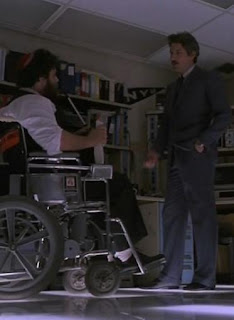 As the film picks up, those who actually work in campaign consulting - like ourselves - can’t help but notice how nice St. John’s office is. It’s a world-class working space, with a bed and shower in one room for when St. John returns from traveling. He also flies across the country - and rather frequently - in a private jet.
Where does he get all this money? Well, it is later explained that his retainer rate for clients is $25,000 per month with a 15% commission on all ad-buys, plus a fee for production. It is mentioned that he has about eight clients. That means his firm is probably making a good $3 million a year, if not more. That’s quite a lot more than what’s realistic, even for the best consultants. Oh, and he has no partners to share it with, something that is pretty uncommon at top-tier consulting firms.
But he does his job well. He gets involved in every detail of all the campaigns that hire him - even directing the campaign ads he is producing. In one scene, he directs an ad in New Mexico where he puts a camera in a helicopter that flies in for a shot. To say the least, it’s excessive.
And then there’s the campaign office for his Senate candidate in Ohio. Not only is it bigger than any campaign office we’ve ever seen, but it’s well organized, classy looking, and every desk has a computer - pretty high-tech for 1986. So much so that it can’t be taken seriously.
In the end, it’s pretty obvious what the filmmakers were going for. The St. John character was supposed to be jaded about politics and more concerned about money than principles. Making the work, life, and environment of this consultant look classier was necessary (perhaps) for the story - but it also made for a widely inaccurate account of campaign consulting.
“State of Play” (2009)
While it’s not a movie about campaigns, “State of Play” is worth mentioning in this post because of some details that political-junkies like ourselves can’t help but shake our heads at.
The film follows journalist Cal McAffrey (Russell Crowe) as he investigates the death of an aide to his old friend, Congressman Stephen Collins (Ben Affleck). Collins is the chairman of a committee that oversees defense contracts. He uses the position to attack a company called PointCorp, which highly resembles the real-life contractor Blackwater.

Ben Affleck is not exactly an old man, and the idea that his character was given a chairmanship of a powerful committee is pretty laughable - especially when you see all the older Congressmen sitting around him during committee hearings. Both houses of Congress work on a seniority system that would not pass over more experienced members for the position.
It soon comes to light that Collins was having an affair with the aide who was killed. He is called to discuss the scandal with the party leadership. Yet the only House leader present at the meeting is the Majority Whip. To say the least, it’s extremely unlikely that the Speaker and Majority Leader would be absent from that meeting, especially considering the fact that Collins was a committee chair.
But one of the worst slip-ups in the production was Collins’s facial hair. The congressman frequently sports a five o’clock shadow, even during committee meetings. Anyone who has worked on Capitol Hill will tell you that five o’clock shadows do not happen with members of Congress - in fact, the male members usually shave twice a day to avoid such an informal look.
The fact that this movie overlooks these details demonstrates a clear lack of experience in Congressional politics on the part of the producers, director, and casting director.
It should be pointed out that none of the films mentioned today were bad movies. In fact, they all bring up some good points and ideas about politics. The mistakes they make are part lack of research, part budget constraints, and part entertainment considerations - for example, sometimes the movies err specifically for the sake of plot development.
In the end, Hollywood can’t produce a perfectly accurate movie involving politics. They need to take pragmatic approaches to these productions, even at the risk of annoying the small portion of the audience who happen to be politicos. And we can live with that.
Coming Friday: The Top 5 Political Campaign Movies! Don’t forget to send us your Top 5 - email the list to Dave@HogensenStrategies.com, and we’ll mention them in our post!
It would be impossible to watch every political movie ever produced and list every mistake Hollywood has ever made. So we decided to look at three films and show you some common errors that can be seen in fictional political movies.
“Swing Vote” (2008)
In this comedy-drama about a non-political working-class New Mexican, Bud Johnson (Kevin Costner) is given the choice between two presidential candidates when the election comes down to his single vote. While the film explores some incredibly interesting points about modern campaign politics, the producers made some notable - though probably forgivable - mistakes about campaigns.
 To begin, incumbent GOP President Andy Boone (Kelsey Grammer) sits in the Oval Office on Election Day, good spirited as he discusses his legacy with his campaign manager, Marty Fox (Stanley Tucci). Fox walks back-and-forth in the office, dictating Election Day strategy over the phone. One experienced in campaigns can’t help but notice that 1) the candidate would not be that calm, and 2) most of the Election Day operations would have been worked out long ahead of time. The entire seen is meant for character development, but lacks a lot of accuracy.
In another early scene, Democratic challenger Don Greenleaf (Dennis Hopper) addresses a crowd of supporters in one of the mountain states. One can’t help but notice that the size of the crowd is easily under 200 people - which is fairly laughable considering a presidential campaign rally should have no fewer than several thousand attendees - even up to 100,000 that close to the end of the race. While this could be blamed on the film’s budget, it was probably more due to a lack of attention to detail.
Later on, Bud meets President Boone on Air Force One, where Fox frequently reminds Bud to address him as “Mr. President” - something Boone apologizes for when they speak alone. If anything, Fox would be much more sensitive to the negatives of formalities than the president. As campaign manager, he would know better. Then Bud attends a dinner held by the Democratic Party where Greenleaf courts the vote. Again, the event is overly formal, which is highly unlikely given how informal of a guy Bud is.
A minor detail that we picked out is how Greenleaf’s campaign manager - Art Crumb (Nathan Lane) - discusses production of a campaign commercial. He instructs his staff to stay away from Madison Avenue outlets and other advertisers. In reality, these ad men probably wouldn’t be getting that work in the first place - most campaign spots are produced by political consultants and not ordinary advertising agencies.
Finally, in order to win his vote, both sides flip-flop on some of their core values. It raises an interesting point about micro-targeting and already winning base support, but it is still unlikely that the Republican would do an ad endorsing gay marriage and the Democrat would blast abortion like they do in the movie. More likely, they would focus on points in which their campaign agrees with Bud, and stress those points as much as possible. Every good campaign worker knows that contradiction is the first mistake in messaging.
We have to believe that the writers for this film had some idea of how campaigns operate when they wrote the script. It seems that inevitably, some producers without any background or knowledge of campaign politics probably made some bad choices in the filming of this movie.
“Power” (1986)
An overall impressive movie about the world of political campaign consulting, “Power” follows Democratic strategist Pete St. John (Richard Gere) and several of his campaigns, including gubernatorial races in New Mexico and Washington, a senatorial race in Ohio, and a presidential race somewhere in South America.
 As the film picks up, those who actually work in campaign consulting - like ourselves - can’t help but notice how nice St. John’s office is. It’s a world-class working space, with a bed and shower in one room for when St. John returns from traveling. He also flies across the country - and rather frequently - in a private jet.
Where does he get all this money? Well, it is later explained that his retainer rate for clients is $25,000 per month with a 15% commission on all ad-buys, plus a fee for production. It is mentioned that he has about eight clients. That means his firm is probably making a good $3 million a year, if not more. That’s quite a lot more than what’s realistic, even for the best consultants. Oh, and he has no partners to share it with, something that is pretty uncommon at top-tier consulting firms.
But he does his job well. He gets involved in every detail of all the campaigns that hire him - even directing the campaign ads he is producing. In one scene, he directs an ad in New Mexico where he puts a camera in a helicopter that flies in for a shot. To say the least, it’s excessive.
And then there’s the campaign office for his Senate candidate in Ohio. Not only is it bigger than any campaign office we’ve ever seen, but it’s well organized, classy looking, and every desk has a computer - pretty high-tech for 1986. So much so that it can’t be taken seriously.
In the end, it’s pretty obvious what the filmmakers were going for. The St. John character was supposed to be jaded about politics and more concerned about money than principles. Making the work, life, and environment of this consultant look classier was necessary (perhaps) for the story - but it also made for a widely inaccurate account of campaign consulting.
“State of Play” (2009)
While it’s not a movie about campaigns, “State of Play” is worth mentioning in this post because of some details that political-junkies like ourselves can’t help but shake our heads at.
The film follows journalist Cal McAffrey (Russell Crowe) as he investigates the death of an aide to his old friend, Congressman Stephen Collins (Ben Affleck). Collins is the chairman of a committee that oversees defense contracts. He uses the position to attack a company called PointCorp, which highly resembles the real-life contractor Blackwater.

Ben Affleck is not exactly an old man, and the idea that his character was given a chairmanship of a powerful committee is pretty laughable - especially when you see all the older Congressmen sitting around him during committee hearings. Both houses of Congress work on a seniority system that would not pass over more experienced members for the position.
It soon comes to light that Collins was having an affair with the aide who was killed. He is called to discuss the scandal with the party leadership. Yet the only House leader present at the meeting is the Majority Whip. To say the least, it’s extremely unlikely that the Speaker and Majority Leader would be absent from that meeting, especially considering the fact that Collins was a committee chair.
But one of the worst slip-ups in the production was Collins’s facial hair. The congressman frequently sports a five o’clock shadow, even during committee meetings. Anyone who has worked on Capitol Hill will tell you that five o’clock shadows do not happen with members of Congress - in fact, the male members usually shave twice a day to avoid such an informal look.
The fact that this movie overlooks these details demonstrates a clear lack of experience in Congressional politics on the part of the producers, director, and casting director.
It should be pointed out that none of the films mentioned today were bad movies. In fact, they all bring up some good points and ideas about politics. The mistakes they make are part lack of research, part budget constraints, and part entertainment considerations - for example, sometimes the movies err specifically for the sake of plot development.
In the end, Hollywood can’t produce a perfectly accurate movie involving politics. They need to take pragmatic approaches to these productions, even at the risk of annoying the small portion of the audience who happen to be politicos. And we can live with that.
Coming Friday: The Top 5 Political Campaign Movies! Don’t forget to send us your Top 5 - email the list to Dave@HogensenStrategies.com, and we’ll mention them in our post!
Friday, December 11, 2009
The Best Campaign Documentaries
Part 3 of our 5-part series: "Hollywood Does Politics"
On Tuesday, we’ll be showing you cases in which Hollywood fiction yields error on the subject of political campaigns. But what kinds of movies are going to show campaigning most accurately? Documentaries, of course.
Here are five of our favorite political campaign documentaries…
“The War Room” (1993)
“The War Room” takes an in depth and insightful look at the 1992 Clinton for President campaign and how it transformed how political campaigns are managed.
 Although this movie does not give away any of the campaign secrets, it does dive into the inner workings of the campaign from the lowly days before the New Hampshire primary, the bus tours across the country, into the spin rooms of debate night, and all the way to the successful night of November 3, 1992.
James Carville, George Stephanopoulos, and the rest of the senior staff produce an exhilarating journey that every politico has to see. This movie primarily focuses on Carville and the yin to Carville's yang: Stephanopoulos. No other campaign before hand was willing to have cameras follow them around 24 hours a day taping their every move.
This act of transparency showed how the campaign rebutted the attacks of George H. W. Bush, Gennifer Flowers, and the media's perceptions of Clinton's character flaws. This movie captures how much enthusiasm and pain staffers go through during the long hours seen on the campaign trail without the usual spin doctors that are seen through our television screens every election cycle.
We see how “The War Room” was managed with kitchy signs on the wall, and the infamous, “it's the economy, stupid” saying on a white board. This movie is a home run, and should be in the queue of your NetFlix account.
“Street Fight” (2005)
A chronicle of Cory Booker’s first mayoral campaign in the city of Newark, NJ, “Street Fight” documents just how tough urban politics can be.
 Booker - a freshman City Council member at the time - was challenging 16-year incumbent Sharpe James, who Booker argued was sitting on top of decades of failed promises. James argued that Booker - who was from the suburbs originally - was a carpetbagger.
The race got dirty fast. James didn’t exactly have a sense of choosing his words carefully and frequently said that Booker was white, Jewish, and Republican - none of which were true. He also suggested that Booker took money from the Ku Klux Klan, and was being propped up by a Jewish media conspiracy. He said these things so much, in fact, that people started to believe the outlandish claims. Booker, meanwhile, went with conventional political wisdom in his message, arguing that these attacks were meant to distract voters from the failings of James policies.
James also frequently misused his powers as mayor for the campaign, instructing police to illegally tear down Booker signs and directed other city departments to go after Booker supporters for several frivolous ordinance violations.
The film also documents the importance of race in urban politics. Booker received endorsements from race-interested author Cornell West and director Spike Lee, while James got help from civil rights leaders Rev. Al Sharpton and Rev. Jesse Jackson.
In the end, James won the 2002 race with a 53% - 47% margin. Booker announced his 2006 candidacy a year later.
This is, simply put, a must-see for any campaign worker who wants to get a feel for just how intense urban campaigns can be.
“Please Vote for Me” (2007)
Chinese democracy? Sounds like a paradox, but in “Please Vote for Me” a Chinese micro-democracy shows us just how natural campaigning can be.
 The film focuses on a primary-school election for Class Monitor. Meant to be part of a civics lesson about different political systems, one Chinese teacher decides not to appoint a Class Monitor herself, but rather nominate three candidates for the students to choose from.
They do not even understand what democracy is, but acting it out gives them a crash course. The 8-year-old students begin plotting amongst each other to disrupt their opponents’ candidacies. Almost immediately the campaigning becomes vicious. Taunting begins and the candidates are often reduced to tears.
What’s really surprising, however, is how the parents treat the election. They effectively act as campaign consultants, teaching their kids oratory skills, to stay on message, use effective smears, and even count their votes like we do with Voter ID.
In a great and memorable scene, one candidate attacks the incumbent Class Monitor (I’m not making this up) during a debate for being so strict that it makes him a dictator. The other aruges that he - like a parent - must be strict for the sake of obedience.
This film is perfect for anyone interested in political science. It both demonstrates how all campaigns work similarly regardless of how advanced a democracy may be, and how politics in general look on a micro-level. We highly recommend seeing it.
“Our Brand is Crisis” (2005)
Just because campaign politics works similarly from democracy to democracy, one cannot expect all political systems to work the same way.
 That’s the lesson to be learned in “Our Brand is Crisis”, where James Carville’s consulting firm - Greenville Carville Shrum (GCS) - works for moderate Bolivian presidential candidate Gonzalo Sanchez de Lozada (or “Goni”).
Goni is behind in the polls when he hires GCS. The consultants immediately begin message tests, focus groups, and other tactics to see where they can steer him right. In strategy meetings, Carville and the others determine that they must portray his main opponent as a threat to Bolivia because of his wealth and military background.
It’s a tough and dynamic race in which public opinion is constantly shifting. In the end, Goni secures a narrow victory with about 22%.
However, 22% is hardly a consensus, as GCS finds out later. Goni faces insurmountable criticism, especially during a subsequent gas conflict in which populists create an uproar over plans to export natural gas - Bolivia’s most abundant resource - rather than use it at home. Protesters, led by current President Evo Morales, eventually convince Goni to resign. Today Goni lives in exile in the U.S.
This film teaches an important lesson about the errors of looking at third world campaign politics through an American lens. We recommend it to anyone interested in international politics.
“Can Mr. Smith Get to Washington Anymore?” (2006)
When longtime Rep. Dick Gephardt (D-MO) announced his retirement in 2004, a large field of candidates came in to secure the Democratic nomination and become the new Congressperson. One of those candidates was Jeff Smith.
 The film focuses on Smith’s candidacy and the young, inexperienced staff he hires. Smith is young himself, has a very high voice, and is very, very progressive. He has very little political experience while his opponents are well funded with plenty of name recognition. Everyone - including Smith’s parents and some of his staff - think he’s crazy to run.
However, Smith gains traction and attention - even securing an endorsement from future DNC Chairman Howard Dean. In the end, Smith comes in second in the primary, narrowly losing to the most well-known candidate.
The tactics the campaign uses are well-documented. They primarily focus on field operations and tracking the support of voters in the district. The film also explores press work and fundraising. “Can Mr. Smith Get to Washington Anymore?” is so in-depth regarding the campaign tactics that it might not even make sense to the average person - much of the film is really only relevant to those who have worked on campaigns.
But this is a great film for the average person if they want to learn about the nature of campaign politics - it’s exhausting, stressful, and often enough it’s unrewarding. We highly recommend watching it to get a sense of that unlike anywhere else - except for actually working on a campaign.
Coming Tuesday: “When Hollywood Gets It Wrong”
WAYLA would like to thank Brad Wojciechowski for his contributions to this blog post. Brad is the founder of Forward Solutions Group, a political consulting firm in Madison, WI. He specializes in fundraising and political development and has extensive experience on the frontlines of the most successful political campaigns. His particular interests are local campaigns and issues, because they have the most effect on the day to day lives of Americans.
On Tuesday, we’ll be showing you cases in which Hollywood fiction yields error on the subject of political campaigns. But what kinds of movies are going to show campaigning most accurately? Documentaries, of course.
Here are five of our favorite political campaign documentaries…
“The War Room” (1993)
“The War Room” takes an in depth and insightful look at the 1992 Clinton for President campaign and how it transformed how political campaigns are managed.
 Although this movie does not give away any of the campaign secrets, it does dive into the inner workings of the campaign from the lowly days before the New Hampshire primary, the bus tours across the country, into the spin rooms of debate night, and all the way to the successful night of November 3, 1992.
James Carville, George Stephanopoulos, and the rest of the senior staff produce an exhilarating journey that every politico has to see. This movie primarily focuses on Carville and the yin to Carville's yang: Stephanopoulos. No other campaign before hand was willing to have cameras follow them around 24 hours a day taping their every move.
This act of transparency showed how the campaign rebutted the attacks of George H. W. Bush, Gennifer Flowers, and the media's perceptions of Clinton's character flaws. This movie captures how much enthusiasm and pain staffers go through during the long hours seen on the campaign trail without the usual spin doctors that are seen through our television screens every election cycle.
We see how “The War Room” was managed with kitchy signs on the wall, and the infamous, “it's the economy, stupid” saying on a white board. This movie is a home run, and should be in the queue of your NetFlix account.
“Street Fight” (2005)
A chronicle of Cory Booker’s first mayoral campaign in the city of Newark, NJ, “Street Fight” documents just how tough urban politics can be.
 Booker - a freshman City Council member at the time - was challenging 16-year incumbent Sharpe James, who Booker argued was sitting on top of decades of failed promises. James argued that Booker - who was from the suburbs originally - was a carpetbagger.
The race got dirty fast. James didn’t exactly have a sense of choosing his words carefully and frequently said that Booker was white, Jewish, and Republican - none of which were true. He also suggested that Booker took money from the Ku Klux Klan, and was being propped up by a Jewish media conspiracy. He said these things so much, in fact, that people started to believe the outlandish claims. Booker, meanwhile, went with conventional political wisdom in his message, arguing that these attacks were meant to distract voters from the failings of James policies.
James also frequently misused his powers as mayor for the campaign, instructing police to illegally tear down Booker signs and directed other city departments to go after Booker supporters for several frivolous ordinance violations.
The film also documents the importance of race in urban politics. Booker received endorsements from race-interested author Cornell West and director Spike Lee, while James got help from civil rights leaders Rev. Al Sharpton and Rev. Jesse Jackson.
In the end, James won the 2002 race with a 53% - 47% margin. Booker announced his 2006 candidacy a year later.
This is, simply put, a must-see for any campaign worker who wants to get a feel for just how intense urban campaigns can be.
“Please Vote for Me” (2007)
Chinese democracy? Sounds like a paradox, but in “Please Vote for Me” a Chinese micro-democracy shows us just how natural campaigning can be.
 The film focuses on a primary-school election for Class Monitor. Meant to be part of a civics lesson about different political systems, one Chinese teacher decides not to appoint a Class Monitor herself, but rather nominate three candidates for the students to choose from.
They do not even understand what democracy is, but acting it out gives them a crash course. The 8-year-old students begin plotting amongst each other to disrupt their opponents’ candidacies. Almost immediately the campaigning becomes vicious. Taunting begins and the candidates are often reduced to tears.
What’s really surprising, however, is how the parents treat the election. They effectively act as campaign consultants, teaching their kids oratory skills, to stay on message, use effective smears, and even count their votes like we do with Voter ID.
In a great and memorable scene, one candidate attacks the incumbent Class Monitor (I’m not making this up) during a debate for being so strict that it makes him a dictator. The other aruges that he - like a parent - must be strict for the sake of obedience.
This film is perfect for anyone interested in political science. It both demonstrates how all campaigns work similarly regardless of how advanced a democracy may be, and how politics in general look on a micro-level. We highly recommend seeing it.
“Our Brand is Crisis” (2005)
Just because campaign politics works similarly from democracy to democracy, one cannot expect all political systems to work the same way.
 That’s the lesson to be learned in “Our Brand is Crisis”, where James Carville’s consulting firm - Greenville Carville Shrum (GCS) - works for moderate Bolivian presidential candidate Gonzalo Sanchez de Lozada (or “Goni”).
Goni is behind in the polls when he hires GCS. The consultants immediately begin message tests, focus groups, and other tactics to see where they can steer him right. In strategy meetings, Carville and the others determine that they must portray his main opponent as a threat to Bolivia because of his wealth and military background.
It’s a tough and dynamic race in which public opinion is constantly shifting. In the end, Goni secures a narrow victory with about 22%.
However, 22% is hardly a consensus, as GCS finds out later. Goni faces insurmountable criticism, especially during a subsequent gas conflict in which populists create an uproar over plans to export natural gas - Bolivia’s most abundant resource - rather than use it at home. Protesters, led by current President Evo Morales, eventually convince Goni to resign. Today Goni lives in exile in the U.S.
This film teaches an important lesson about the errors of looking at third world campaign politics through an American lens. We recommend it to anyone interested in international politics.
“Can Mr. Smith Get to Washington Anymore?” (2006)
When longtime Rep. Dick Gephardt (D-MO) announced his retirement in 2004, a large field of candidates came in to secure the Democratic nomination and become the new Congressperson. One of those candidates was Jeff Smith.
 The film focuses on Smith’s candidacy and the young, inexperienced staff he hires. Smith is young himself, has a very high voice, and is very, very progressive. He has very little political experience while his opponents are well funded with plenty of name recognition. Everyone - including Smith’s parents and some of his staff - think he’s crazy to run.
However, Smith gains traction and attention - even securing an endorsement from future DNC Chairman Howard Dean. In the end, Smith comes in second in the primary, narrowly losing to the most well-known candidate.
The tactics the campaign uses are well-documented. They primarily focus on field operations and tracking the support of voters in the district. The film also explores press work and fundraising. “Can Mr. Smith Get to Washington Anymore?” is so in-depth regarding the campaign tactics that it might not even make sense to the average person - much of the film is really only relevant to those who have worked on campaigns.
But this is a great film for the average person if they want to learn about the nature of campaign politics - it’s exhausting, stressful, and often enough it’s unrewarding. We highly recommend watching it to get a sense of that unlike anywhere else - except for actually working on a campaign.
Coming Tuesday: “When Hollywood Gets It Wrong”
WAYLA would like to thank Brad Wojciechowski for his contributions to this blog post. Brad is the founder of Forward Solutions Group, a political consulting firm in Madison, WI. He specializes in fundraising and political development and has extensive experience on the frontlines of the most successful political campaigns. His particular interests are local campaigns and issues, because they have the most effect on the day to day lives of Americans.
Tuesday, December 8, 2009
Do Political Movies Lean Right or Left?
Part 2 of our 5-part series: Hollywood Does Politics
Before we tell you our Top 5 Political Campaign Movies next week, we want to ask an important question that could influence our list: what are the agendas?
Are their even any agendas to these movies? If so, are they conservative or liberal?
Everyone knows that Hollywood is pretty liberal. Movie stars like Tom Hanks, Brad Pitt, Sarah Jessica Parker, and Robert De Niro make no secret of their support for the Democratic Party. But do the films they star in have an ideological bent?

To find out, we’ll examine a sample list of campaign movies that our helpful intern Regan compiled, as well as a few non-campaign movies that still deal with politics.
They are…
We’ll then use the following tags for each movie: “liberal”, “leaning-liberal”, “neutral”, “leaning-conservative”, “conservative”, and “[insert ideology here] with a twist”.*
So what kind of breakdown do we see?
Of the 18 movies listed above, 7 can be considered “neutral”, 4 are “leaning-liberal”, 3 are “liberal, and 3 are “liberal with a twist” - and then there’s Wag the Dog, which is just twisted in general (although some readily compare it to the Clinton Administration).
None of these movies, however, are “conservative” or even “leaning-conservative”, and that’s fairly interesting.
Another interesting thing about the breakdown are which movies lean which way (we have the list again at the bottom of this post). Most of the comedies (Black Sheep, Malibu’s Most Wanted, Head of State, etc.) are neutral - they go for more of a “feel good” message than an ideological one. It makes sense too - just try creating a “feel good” atmosphere with your family over a holiday dinner this month while talking politics.
Similarly, all of the TV shows we examined on Friday were pretty neutral as well.
What’s more interesting is that almost every movie of the 18 listed portrays politics at least somewhat negatively - especially the “twist” ones. Sometimes the candidate in the movie rises above the manure of politics, sometimes they fulfill the tragic archetype and fall into it entirely.
Of course, this was not exactly a scientifically-sound examination. Our list was not a random sample of films, and there may be some conservative ones out there that we don’t know about, for instance.
But it does at least suggest that political movies (as a whole) lean further left than right.
Now we come to another serious question: as Democrats ourselves, are we simply going to pick the movies we ideologically agree with most when we select our Top 5 next week?
It’s something for us to think about.
The list with tags:
*To be clear about what we mean by “with a twist”, take Primary Colors as an example. Everyone knows the movie is about Bill Clinton’s primary battles in 1992, and - for the most part - it puts the candidate in a fairly positive light for much of the movie. Sure, he’s a womanizer, but that can be forgiven by his inspirational message and the passion he has for leading the country in a better direction.
As the films progresses, however, it exposes the dirty tactics he must wage in order to win his race. The protagonist says he hates the game, not the player, but for the audience it’s tough to love the player after you see how he has to play.
So the movie would appear to agree with the left, but there’s a twist.
Coming Friday: The Best Campaign Documentaries!
Before we tell you our Top 5 Political Campaign Movies next week, we want to ask an important question that could influence our list: what are the agendas?
Are their even any agendas to these movies? If so, are they conservative or liberal?
Everyone knows that Hollywood is pretty liberal. Movie stars like Tom Hanks, Brad Pitt, Sarah Jessica Parker, and Robert De Niro make no secret of their support for the Democratic Party. But do the films they star in have an ideological bent?

To find out, we’ll examine a sample list of campaign movies that our helpful intern Regan compiled, as well as a few non-campaign movies that still deal with politics.
They are…
• Recount (2008)
• Man of the Year (2006)
• Bulworth (1998)
• Silver City (2004)
• Black Sheep (1996)
• Malibu’s Most Wanted (2003)
• Primary Colors (1998)
• Head of State (2003)
• Poster Boy (2004)
• The Best Man (1964)
• The Candidate (1972)
• Bob Roberts (1992)
• Linda Lovelace for President (1975)
• Dave (1993)
• Wag the Dog (1997)
• The American President (1995)
• American Dreamz (2006)
• State of Play (2009)
We’ll then use the following tags for each movie: “liberal”, “leaning-liberal”, “neutral”, “leaning-conservative”, “conservative”, and “[insert ideology here] with a twist”.*
So what kind of breakdown do we see?
Of the 18 movies listed above, 7 can be considered “neutral”, 4 are “leaning-liberal”, 3 are “liberal, and 3 are “liberal with a twist” - and then there’s Wag the Dog, which is just twisted in general (although some readily compare it to the Clinton Administration).
None of these movies, however, are “conservative” or even “leaning-conservative”, and that’s fairly interesting.
Another interesting thing about the breakdown are which movies lean which way (we have the list again at the bottom of this post). Most of the comedies (Black Sheep, Malibu’s Most Wanted, Head of State, etc.) are neutral - they go for more of a “feel good” message than an ideological one. It makes sense too - just try creating a “feel good” atmosphere with your family over a holiday dinner this month while talking politics.
Similarly, all of the TV shows we examined on Friday were pretty neutral as well.
What’s more interesting is that almost every movie of the 18 listed portrays politics at least somewhat negatively - especially the “twist” ones. Sometimes the candidate in the movie rises above the manure of politics, sometimes they fulfill the tragic archetype and fall into it entirely.
Of course, this was not exactly a scientifically-sound examination. Our list was not a random sample of films, and there may be some conservative ones out there that we don’t know about, for instance.
But it does at least suggest that political movies (as a whole) lean further left than right.
Now we come to another serious question: as Democrats ourselves, are we simply going to pick the movies we ideologically agree with most when we select our Top 5 next week?
It’s something for us to think about.
The list with tags:
• Recount: “leaning-liberal”
• Man of the Year: “neutral”
• Bulworth: “liberal”
• Silver City: “leaning-liberal”
• Black Sheep: “neutral”
• Malibu’s Most Wanted: “neutral”
• Primary Colors: “liberal with a twist”
• Head of State: “neutral”
• Poster Boy: “liberal”
• The Best Man: “neutral”
• The Candidate: “liberal with a twist”
• Bob Roberts: “leaning-liberal”
• Linda Lovelace for President: “neutral”
• Dave: “neutral”
• Wag the Dog: “twisted”
• The American President: “liberal”
• American Dreamz: “leaning-liberal”
• State of Play: “liberal with a twist”
*To be clear about what we mean by “with a twist”, take Primary Colors as an example. Everyone knows the movie is about Bill Clinton’s primary battles in 1992, and - for the most part - it puts the candidate in a fairly positive light for much of the movie. Sure, he’s a womanizer, but that can be forgiven by his inspirational message and the passion he has for leading the country in a better direction.
As the films progresses, however, it exposes the dirty tactics he must wage in order to win his race. The protagonist says he hates the game, not the player, but for the audience it’s tough to love the player after you see how he has to play.
So the movie would appear to agree with the left, but there’s a twist.
Coming Friday: The Best Campaign Documentaries!
Friday, December 4, 2009
Campaigns on TV
Part 1 of our 5-part series: “Hollywood Does Politics”
It would be impossible to cover every television show that has ever tried to portray a political campaign, but today we’ll give you a synopsis of the campaigns on some of the most popular programs over the past decade.
“The Wire” - Season 4 (HBO)
At the end of “The Wire’s” third season, Councilman Tommy Carcetti makes the decision to run for mayor of Baltimore. He hires a friend from law school, Theresa D’Agotino, who now works as a fundraiser in Washington DC, to be his campaign advisor. As the fourth season opens, Carcetti is in the midst of a difficult primary battle between himself, incumbent Mayor Clarence Royce, and another Councilman, Tony Gray. Both Royce and Gray are African-American.
 The ways in which “The Wire” addresses political campaigns are more sophisticated than in most television shows. Of course Carcetti is seen making the obligatory stops to a senior center, or prepping and participating in debates. There are also some scenes of “family life,” where he chooses playing a game with his daughter over being on time for a campaign event.
Yet, the show incorporates elements of the campaign that go beyond the hackneyed or formulaic. For instance, the Carcetti campaign uses Tony Gray to split the black vote in the primary, thereby insuring that Carcetti has a better chance to win. When Gray becomes bitter about his position – and the way he is being exploited – Carcetti’s campaign manager tells Gray to consider the future; Gray may not win the primary this year, but he will have raised his name recognition enough to win a race for state legislature or US Congress in the next term.
The realities of campaigning for a position in an urban area are also explored. Carcetti and his team recognize that organizations such as the Police Unions, neighborhood associations, and churches are invaluable allies that ultimately decide elections in the city of Baltimore. Carcetti is seen making deals with some of these organizations who, even though they cannot openly break ties with the incumbent mayor, give him their tacit support.
Finally, “The Wire” also chronicles the difficult “endorsement dance” that a campaign must do with existing elected officials whose support, and voter contact lists, are crucial to winning a close election. Throughout the course of the Carcetti campaign, Tommy makes deals with various officials who have been either alienated or betrayed by the existing mayor, promising them that they will have a voice in his administration. Carcetti even has a pivotal encounter with state senator Clay Davis, a recurring corrupt politician on the show. Davis secures a $20,000 check for his re-election campaign from Carcetti by promising, not to endorse him, but to just ensure that the votes in his district are evenly split between Mayor Roye and Carcetti. He also promises that he will put some “walking around money” in the street on Election Day. Though Davis is clearly hedging his bets against the possibility that Carcetti might lose, Carcetti realizes that Davis’s influence on the African American voters in his district is too important to turn down.
The show also explores the sometimes-facile nature of our election decisions. Though it seems that Obama patented the idea of “change,” many candidates run on the platform of shifting the status quo – then find that shift almost impossible to make once they’re elected. Carcetti, who is losing to Royce in the polls by over ten points, gains momentum when he calls out Royce over the murder of a witness in a pending drug case. Carcetti had set aside city funding for the protection of witnesses, and claimed that Royce’s misuse of the funding was another example of the mayor’s failed policies. The bump in the polls that Carcetti gets from this standoff with the mayor gets him key endorsements from city leaders, and ultimately wins him the election.
However, the show delivers an ironic postscript when Detective Kima Greggs – another regular on the show – discovers that the witness who Carcetti used as an example of the corruption of the Royce administration was not murdered, but was merely the unintended victim of a stray bullet. Carcetti’s victory was based on a technicality of sorts. This lone note of discord only increases once Carcetti realizes that he has inherited a host of problems and must work within the system he once vilified to solve them.
“Heroes” - Season 1 (NBC)
If “The Wire’s” portrayal of campaigns was one of the most sophisticated, then one of the least sophisticated portrayals comes from the first season of “Heroes”. While the campaign at hand is only a small story in the larger saga, it is still painful for a campaign person to see the writers and producers get it so wrong.
 One of the many heroes on the show - Nathan Petrelli - is running for Congress in lower Manhattan. A former prosecutor and a man that can fly, Petrelli is willing to take ethically dubious paths to winning his election. For the first few episodes he is constantly behind in the polls, willing to go so far as to sell his family down the river when he feels it will help him.
By the middle of the season, the campaign becomes a lot less relevant, but a few notable moments stick out for those of us who have worked on Congressional campaigns.
To begin, his campaign office is a bit larger than one would expect for a Congressional campaign, even in a dense area like lower Manhattan. There are no volunteers there at any point, and less office noise than one would expect to see in that setting. It also seems strange that Petrelli offers his brother Peter (who is currently discovering his own powers) a job as Volunteer Coordinator for the final stretch of the campaign.
There is an interesting scene in which he holds a campaign fundraiser in the office - which he claims will make him look “fiscally responsible” - which, between its excessive classiness and short time before the election, seems unrealistic. But the least realistic part about the scene is that they invited the press, with TV cameras and everything - something we’ve never seen at a political fundraiser.
Other parts to shake your head at are scenes in which his family makes strategy decisions with him (the campaign staff is totally absent) and when he gets a $4 million contribution from one of his father’s clients (about 850 times the legal limit for federal races) which he feels comfortable admitting to a journalist later on.
But by far the most ridiculous part of the entire season was the fact that Petrelli - again, a Congressional candidate - had Secret Service detail, something only presidential candidates have the option to receive. Beyond that, however, these body guards are talking politics with him - giving him advice and suggesting that they are part of the campaign.
While “Heroes” is a delightful show for many reasons, the campaign politics portrayed in Season 1 are obviously based on bad political movies and previous Hollywood productions than any actual Congressional campaign.
“The West Wing” - Season 7 (NBC)
The seventh and final season of one of America’s most popular political programs focuses around the last year of the Jed Barlet presidency, and the ongoing campaign to replace him.
Fictional candidates Rep. Matthew Santos (D-TX) - who takes a miraculous victory to win the Democratic nomination - and Sen. Arnold Vinick (R-CA) face-off with 105 days to go before the election at the beginning of Season 7. Over the first few episodes, both candidates jump at opportunities to define their campaigns, dealing with a diverse arrange of issues including boarder security, accountable government, abortion, evolution vs. creationism, and more - like any presidential candidate would.

One interesting aspect of the race is how the sitting Democratic president - Bartlet - and his White House affect the Santos campaign. A series of press leaks from the White House lead the Republican Vinick campaign to stress the importance of integrity. Then there’s how the news of the day can sometimes be an uncontrollable negative factor for a campaign, as is the case when a California power plan malfunctions and Vinick - a nuclear power supporter - has to explain why he supports what now seems like a dangerous energy option.
But despite what the casual viewer would gather from Season 7, it doesn’t really get too deep into the world of campaigns. While the candidates are frequently making speeches, following polls, running and reacting to political TV ads, there is never really any exploration of the “behind the scenes” part of a campaign. In fact, much of it is actually the sort of campaigning that the typical voter could see in a real-life presidential race.
“Monk” - Season 3 Episode 15 (USA)
In the 44th episode of “Monk” - a show about the cases of Adrian Monk, a San Francisco consultant-detective with Obsessive-Compulsive Disorder - Monk’s assistant Natalie runs for School Board. It is an interesting episode because parts of it are very unrealistic of campaigns - but other parts are a little too realistic.
 For one thing, Natalie doesn’t just have an office and volunteers for her campaign - she has a huge office and seemingly hundreds of volunteers! This is obviously pretty over-the-top for a School Board race. Granted, it was necessary for the plot - a copying machine gets shot up by an unknown villain who everyone believes is trying to assassinate Natalie. Monk uses his “gift/curse” to go to work and try to solve the mystery. Nonetheless, a basic understanding about large vs. small campaigns will make one raise an eyebrow during this episode.
Later on Natalie and her opponent face-off in a debate in front of a jam-packed auditorium - again, for a School Board race.
Some parts of the episode - on the other hand - are so realistic it’s painful. Anyone who has worked on a campaign will tell you they love their volunteers, but some are so bad at the tasks given to them that it’s downright frustrating. In one scene, Natalie convinces Monk to sit down and do some volunteer work.
His job is to help the other volunteers fold campaign literature and stick it in an envelope to mail. It’s a simple task, but Monk’s OCD makes him do it ever so slow. The campaign staff tries to give him pointers, but he refuses. As campaign workers, it is absolutely hilarious, and makes us cringe at the same time.
Like every episode of “Monk”, it might not be completely believable, but it is a lot of fun to watch nonetheless.
“The Simpsons” - Season 9 Episode 22 (FOX)
In one of “The Simpsons’” most classic episodes - “Trash of the Titans” - Homer is driven to run for Springfield Sanitation Commissioner after a few garbage men cut off his trash-collecting services.
 Marge forges his name in an apology letter to the incumbent Commissioner, which prompts Homer to go to the Sanitation Commission office and demand his apology back. After fighting with the incumbent, Homer decides to do things his own way and run for the office.
He starts by trying to steal the show at a U2 concert, using the event as a campaign opportunity. Let’s just say it doesn’t work. Later he inadvertently comes up with his campaign slogan “can’t someone else do it?” which he uses to rally in support from his fellow Springfield voters who he feels are asking the same questions about their trash needs. The message: “the garbage man can!” He ends up leading a chorus/parade to a parody version of “the Candy Man Can” and wins the race.
In the end, he finds out he can’t actually live up to his campaign promises - the Sanitation Commission simply can’t take care of everything. It’s the lesson he learns in this episode.
Okay, so “Trash of the Titans” had no realistic campaigning whatsoever. Never has a candidate won an election by spontaneous singing and dancing through the streets. But in the end, that’s what makes the episode so great. It’s an important thing to remember - Hollywood is not going to go for what’s real as often as they will for what’s entertaining. And this episode of “The Simpsons” reminds us of that better than any other show could.
Coming Tuesday: Do Political Movies Lean Left or Right?
It would be impossible to cover every television show that has ever tried to portray a political campaign, but today we’ll give you a synopsis of the campaigns on some of the most popular programs over the past decade.
“The Wire” - Season 4 (HBO)
At the end of “The Wire’s” third season, Councilman Tommy Carcetti makes the decision to run for mayor of Baltimore. He hires a friend from law school, Theresa D’Agotino, who now works as a fundraiser in Washington DC, to be his campaign advisor. As the fourth season opens, Carcetti is in the midst of a difficult primary battle between himself, incumbent Mayor Clarence Royce, and another Councilman, Tony Gray. Both Royce and Gray are African-American.
 The ways in which “The Wire” addresses political campaigns are more sophisticated than in most television shows. Of course Carcetti is seen making the obligatory stops to a senior center, or prepping and participating in debates. There are also some scenes of “family life,” where he chooses playing a game with his daughter over being on time for a campaign event.
 Yet, the show incorporates elements of the campaign that go beyond the hackneyed or formulaic. For instance, the Carcetti campaign uses Tony Gray to split the black vote in the primary, thereby insuring that Carcetti has a better chance to win. When Gray becomes bitter about his position – and the way he is being exploited – Carcetti’s campaign manager tells Gray to consider the future; Gray may not win the primary this year, but he will have raised his name recognition enough to win a race for state legislature or US Congress in the next term.
The realities of campaigning for a position in an urban area are also explored. Carcetti and his team recognize that organizations such as the Police Unions, neighborhood associations, and churches are invaluable allies that ultimately decide elections in the city of Baltimore. Carcetti is seen making deals with some of these organizations who, even though they cannot openly break ties with the incumbent mayor, give him their tacit support.
Finally, “The Wire” also chronicles the difficult “endorsement dance” that a campaign must do with existing elected officials whose support, and voter contact lists, are crucial to winning a close election. Throughout the course of the Carcetti campaign, Tommy makes deals with various officials who have been either alienated or betrayed by the existing mayor, promising them that they will have a voice in his administration. Carcetti even has a pivotal encounter with state senator Clay Davis, a recurring corrupt politician on the show. Davis secures a $20,000 check for his re-election campaign from Carcetti by promising, not to endorse him, but to just ensure that the votes in his district are evenly split between Mayor Roye and Carcetti. He also promises that he will put some “walking around money” in the street on Election Day. Though Davis is clearly hedging his bets against the possibility that Carcetti might lose, Carcetti realizes that Davis’s influence on the African American voters in his district is too important to turn down.
The show also explores the sometimes-facile nature of our election decisions. Though it seems that Obama patented the idea of “change,” many candidates run on the platform of shifting the status quo – then find that shift almost impossible to make once they’re elected. Carcetti, who is losing to Royce in the polls by over ten points, gains momentum when he calls out Royce over the murder of a witness in a pending drug case. Carcetti had set aside city funding for the protection of witnesses, and claimed that Royce’s misuse of the funding was another example of the mayor’s failed policies. The bump in the polls that Carcetti gets from this standoff with the mayor gets him key endorsements from city leaders, and ultimately wins him the election.
However, the show delivers an ironic postscript when Detective Kima Greggs – another regular on the show – discovers that the witness who Carcetti used as an example of the corruption of the Royce administration was not murdered, but was merely the unintended victim of a stray bullet. Carcetti’s victory was based on a technicality of sorts. This lone note of discord only increases once Carcetti realizes that he has inherited a host of problems and must work within the system he once vilified to solve them.
“Heroes” - Season 1 (NBC)
If “The Wire’s” portrayal of campaigns was one of the most sophisticated, then one of the least sophisticated portrayals comes from the first season of “Heroes”. While the campaign at hand is only a small story in the larger saga, it is still painful for a campaign person to see the writers and producers get it so wrong.
 One of the many heroes on the show - Nathan Petrelli - is running for Congress in lower Manhattan. A former prosecutor and a man that can fly, Petrelli is willing to take ethically dubious paths to winning his election. For the first few episodes he is constantly behind in the polls, willing to go so far as to sell his family down the river when he feels it will help him.
By the middle of the season, the campaign becomes a lot less relevant, but a few notable moments stick out for those of us who have worked on Congressional campaigns.
To begin, his campaign office is a bit larger than one would expect for a Congressional campaign, even in a dense area like lower Manhattan. There are no volunteers there at any point, and less office noise than one would expect to see in that setting. It also seems strange that Petrelli offers his brother Peter (who is currently discovering his own powers) a job as Volunteer Coordinator for the final stretch of the campaign.
There is an interesting scene in which he holds a campaign fundraiser in the office - which he claims will make him look “fiscally responsible” - which, between its excessive classiness and short time before the election, seems unrealistic. But the least realistic part about the scene is that they invited the press, with TV cameras and everything - something we’ve never seen at a political fundraiser.
Other parts to shake your head at are scenes in which his family makes strategy decisions with him (the campaign staff is totally absent) and when he gets a $4 million contribution from one of his father’s clients (about 850 times the legal limit for federal races) which he feels comfortable admitting to a journalist later on.
But by far the most ridiculous part of the entire season was the fact that Petrelli - again, a Congressional candidate - had Secret Service detail, something only presidential candidates have the option to receive. Beyond that, however, these body guards are talking politics with him - giving him advice and suggesting that they are part of the campaign.
While “Heroes” is a delightful show for many reasons, the campaign politics portrayed in Season 1 are obviously based on bad political movies and previous Hollywood productions than any actual Congressional campaign.
“The West Wing” - Season 7 (NBC)
The seventh and final season of one of America’s most popular political programs focuses around the last year of the Jed Barlet presidency, and the ongoing campaign to replace him.
Fictional candidates Rep. Matthew Santos (D-TX) - who takes a miraculous victory to win the Democratic nomination - and Sen. Arnold Vinick (R-CA) face-off with 105 days to go before the election at the beginning of Season 7. Over the first few episodes, both candidates jump at opportunities to define their campaigns, dealing with a diverse arrange of issues including boarder security, accountable government, abortion, evolution vs. creationism, and more - like any presidential candidate would.

One interesting aspect of the race is how the sitting Democratic president - Bartlet - and his White House affect the Santos campaign. A series of press leaks from the White House lead the Republican Vinick campaign to stress the importance of integrity. Then there’s how the news of the day can sometimes be an uncontrollable negative factor for a campaign, as is the case when a California power plan malfunctions and Vinick - a nuclear power supporter - has to explain why he supports what now seems like a dangerous energy option.
But despite what the casual viewer would gather from Season 7, it doesn’t really get too deep into the world of campaigns. While the candidates are frequently making speeches, following polls, running and reacting to political TV ads, there is never really any exploration of the “behind the scenes” part of a campaign. In fact, much of it is actually the sort of campaigning that the typical voter could see in a real-life presidential race.
“Monk” - Season 3 Episode 15 (USA)
In the 44th episode of “Monk” - a show about the cases of Adrian Monk, a San Francisco consultant-detective with Obsessive-Compulsive Disorder - Monk’s assistant Natalie runs for School Board. It is an interesting episode because parts of it are very unrealistic of campaigns - but other parts are a little too realistic.
 For one thing, Natalie doesn’t just have an office and volunteers for her campaign - she has a huge office and seemingly hundreds of volunteers! This is obviously pretty over-the-top for a School Board race. Granted, it was necessary for the plot - a copying machine gets shot up by an unknown villain who everyone believes is trying to assassinate Natalie. Monk uses his “gift/curse” to go to work and try to solve the mystery. Nonetheless, a basic understanding about large vs. small campaigns will make one raise an eyebrow during this episode.
Later on Natalie and her opponent face-off in a debate in front of a jam-packed auditorium - again, for a School Board race.
Some parts of the episode - on the other hand - are so realistic it’s painful. Anyone who has worked on a campaign will tell you they love their volunteers, but some are so bad at the tasks given to them that it’s downright frustrating. In one scene, Natalie convinces Monk to sit down and do some volunteer work.
His job is to help the other volunteers fold campaign literature and stick it in an envelope to mail. It’s a simple task, but Monk’s OCD makes him do it ever so slow. The campaign staff tries to give him pointers, but he refuses. As campaign workers, it is absolutely hilarious, and makes us cringe at the same time.
Like every episode of “Monk”, it might not be completely believable, but it is a lot of fun to watch nonetheless.
“The Simpsons” - Season 9 Episode 22 (FOX)
In one of “The Simpsons’” most classic episodes - “Trash of the Titans” - Homer is driven to run for Springfield Sanitation Commissioner after a few garbage men cut off his trash-collecting services.
 Marge forges his name in an apology letter to the incumbent Commissioner, which prompts Homer to go to the Sanitation Commission office and demand his apology back. After fighting with the incumbent, Homer decides to do things his own way and run for the office.
He starts by trying to steal the show at a U2 concert, using the event as a campaign opportunity. Let’s just say it doesn’t work. Later he inadvertently comes up with his campaign slogan “can’t someone else do it?” which he uses to rally in support from his fellow Springfield voters who he feels are asking the same questions about their trash needs. The message: “the garbage man can!” He ends up leading a chorus/parade to a parody version of “the Candy Man Can” and wins the race.
In the end, he finds out he can’t actually live up to his campaign promises - the Sanitation Commission simply can’t take care of everything. It’s the lesson he learns in this episode.
Okay, so “Trash of the Titans” had no realistic campaigning whatsoever. Never has a candidate won an election by spontaneous singing and dancing through the streets. But in the end, that’s what makes the episode so great. It’s an important thing to remember - Hollywood is not going to go for what’s real as often as they will for what’s entertaining. And this episode of “The Simpsons” reminds us of that better than any other show could.
Coming Tuesday: Do Political Movies Lean Left or Right?
Thursday, December 3, 2009
Hollywood Does Politics: A New Series
It’s December, and that means the holiday season has officially begun. So we thought we’d do something fun for the blog and bring you our fourth series: Hollywood Does Politics!
Over the next few weeks, we’ll bring you five posts discussing some of the best - and worst - movies and television shows involving campaign politics.
Of course, the movies don’t always give a realistic portrayal of their subject (just ask a scientist about the “science” in any Sci-Fi film) so we’ll tell you what’s real and what’s not. We’ll also discuss the quality of the productions and a variety of other topics.
Our posts will include…
But before that final post, we want to hear what your top 5 political campaign movies are! Email us at Dave@HogensenStrategies.com and let us know. We’ll see how they line up with ours and we’ll give them the recognition they deserve.
It’s funny to think that only a year ago we started introducing fun and insightful series like “Know Your Third Parties”, “Why Obama Won”, and “21st Century Campaigning” - but we know you’ve enjoyed them and we’re thrilled to keep it up.
We hope you enjoy “Hollywood Does Politics” as well.
Over the next few weeks, we’ll bring you five posts discussing some of the best - and worst - movies and television shows involving campaign politics.
Of course, the movies don’t always give a realistic portrayal of their subject (just ask a scientist about the “science” in any Sci-Fi film) so we’ll tell you what’s real and what’s not. We’ll also discuss the quality of the productions and a variety of other topics.
Our posts will include…
• Campaigns on TV
• Do Political Movies Lean Right or Left?
• The Best Campaign Documentaries
• When Hollywood Gets It Wrong
• The Top 5 Political Campaign Movies
But before that final post, we want to hear what your top 5 political campaign movies are! Email us at Dave@HogensenStrategies.com and let us know. We’ll see how they line up with ours and we’ll give them the recognition they deserve.
It’s funny to think that only a year ago we started introducing fun and insightful series like “Know Your Third Parties”, “Why Obama Won”, and “21st Century Campaigning” - but we know you’ve enjoyed them and we’re thrilled to keep it up.
We hope you enjoy “Hollywood Does Politics” as well.
Subscribe to:
Posts (Atom)


